
A useful free pattern comes with a readable chart and permission to use it. A picture found in image search is not automatically a complete pattern or a freely licensed design.
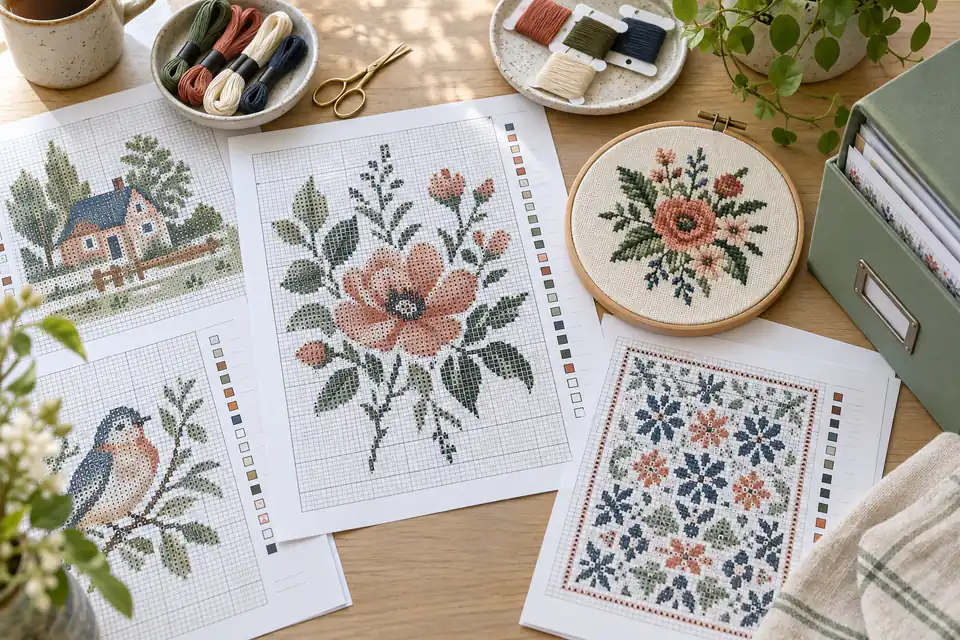
Start at the original source
Look for the designer’s own page, a thread manufacturer’s project library or a publisher’s clearly labeled free chart. Follow the link to the source rather than downloading an unattributed repost. Check whether the page gives a complete chart or only a promotional preview. A small image of finished stitching rarely contains enough information to recreate a reliable chart.
Check what the download contains
A practical PDF includes stitch dimensions, a symbol key and the intended fabric or effective count. Large designs need readable chart pages with coordinates or an assembly map. Make sure the chart is not missing a second page or a separate legend. Open the file before buying thread, and compare its title and preview with the source page.
Understand free-use terms
Free access does not mean unrestricted commercial redistribution. A designer may allow personal stitching while reserving the PDF itself. Keep the original credits and do not upload the chart to another site unless the terms permit it. For our original library, personal stitching and gifts are allowed; the downloadable chart remains part of this collection.
Choose by project needs
Filter by subject and size, then examine the actual stitches rather than choosing only from the preview. If you want a short project, a limited palette and compact shape matter more than a seasonal label. Our library’s free PDFs never enter the custom-photo payment flow. Start with Meadow Bloom, check its fabric requirements, and use the calculator if you change fabric count. The site’s separate $2.99 purchase applies only to a saved custom photo pattern.
Search with a project in mind rather than collecting everything
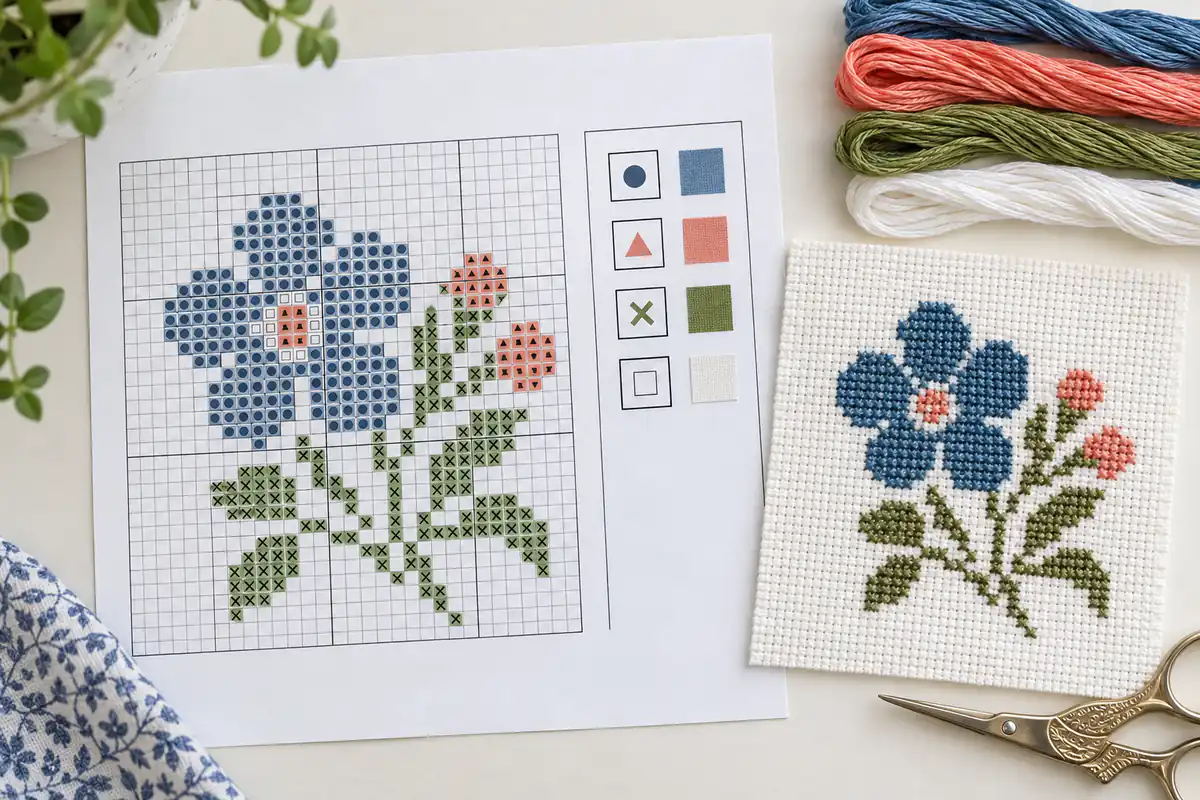
A useful search begins with a few practical constraints: the kind of object you want to make, the approximate stitching area, and the techniques you are comfortable using. Searching for a small full-cross flower for a card is more informative than collecting every free pattern that looks attractive. The constraints help you reject unsuitable charts quickly and make the eventual download easier to use. They also reduce the temptation to start several unrelated projects without gathering the right supplies.
For example, a bookmark has a narrow working area and benefits from a vertically arranged motif. A round hoop can accommodate a centered flower with open fabric around it. A beginner practice piece may need only a clear geometric shape. Browse the free pattern library, then check the stitch dimensions before choosing by the preview alone. If you are unsure about the physical size, use the count converter. A pattern described as mini can still be too wide for a particular object when stitched on your chosen fabric.
Follow the download back to the person or organization offering it
Search engines and social platforms often display copies of images without the surrounding instructions. A repost may omit a legend, crop out the designer's name, or combine pages from different charts. Follow the source link and look for a page that explains what is being offered. An identifiable original source is more useful than a large anonymous collection, even when the anonymous collection appears convenient. This is about obtaining a complete, understandable file as well as respecting the creator's terms.
If a post points to another post rather than to a download page, keep checking until the actual source is clear. Do not assume a visible image is free to redistribute because it has been widely shared. A free chart may be offered for personal stitching while the file itself remains protected from resale or rehosting. Save the source URL with your project notes. Our free-chart quality guide focuses on the contents you should expect once you have found a legitimate download, including the information needed to interpret every symbol.
Inspect the PDF before spending money on supplies
Open the file at a useful zoom and move through every page. The cover preview should correspond to the actual chart, the legend should identify each symbol, and the full dimensions should be stated. Check that the chart is not simply a low-resolution photograph placed inside a PDF wrapper. Enlarging an image does not restore missing symbol detail. If the largest section becomes blurry or ambiguous at normal reading size, the file may not be suitable for practical stitching.
Look for page numbers or coordinates on multipage patterns. Determine whether neighboring pages overlap and how those overlap cells are marked. Check that there are no missing corners or detached key pages. Print one representative section if you intend to work on paper. This small test can reveal clipped margins and indistinct symbols before you buy thread. The printing guide explains how paper size and print scale affect readability. It also clarifies why a large printed square does not imply a large finished stitch: the fabric count controls the physical result.
Understand the different meanings of free
A full free pattern should be usable without unexpectedly paying for the missing chart or legend. A free preview is a different offer: it may let you inspect a design before purchasing the complete export. A free trial may have time or feature limits. These can all be legitimate products, but the terms should be stated clearly enough for you to know which one you are using. Read the download description rather than inferring the offer from a single button label.
On this site, original public library patterns include their complete PDFs free of charge. The photo pattern maker is a separate workflow: creating a preview is free, while the PDF for that saved custom pattern costs $2.99 USD once. The pricing page keeps those offers side by side. You do not need to enter the custom-photo checkout to download a library flower, heart, or seasonal motif. That separation lets you try the chart format and stitching instructions before deciding whether a personalized photo project is appropriate for you.
Match free patterns to the materials you actually have
A chart does not become a suitable project merely because the file costs nothing. You still need fabric of an appropriate size, compatible thread, and enough time to complete the work. Compare the palette with your labeled supplies. If you plan substitutions, check the colors as a group and consider contrast against the chosen cloth. Avoid selecting replacements only because their names sound similar; a manufacturer’s description is not a calibrated color measurement.
Use the fabric calculator to check the existing piece before cutting it. If you are working with an offcut, measure the usable rectangle rather than the longest diagonal. A motif with generous empty background may suit leftover cloth, but its outer dimensions still matter. The floss estimator can help with per-color planning when the chart supplies stitch counts. Treat the estimate as a starting point, particularly if your chosen design has many isolated stitches. A free project is most economical when its actual construction fits the materials already available.
Build a small library that remains easy to navigate
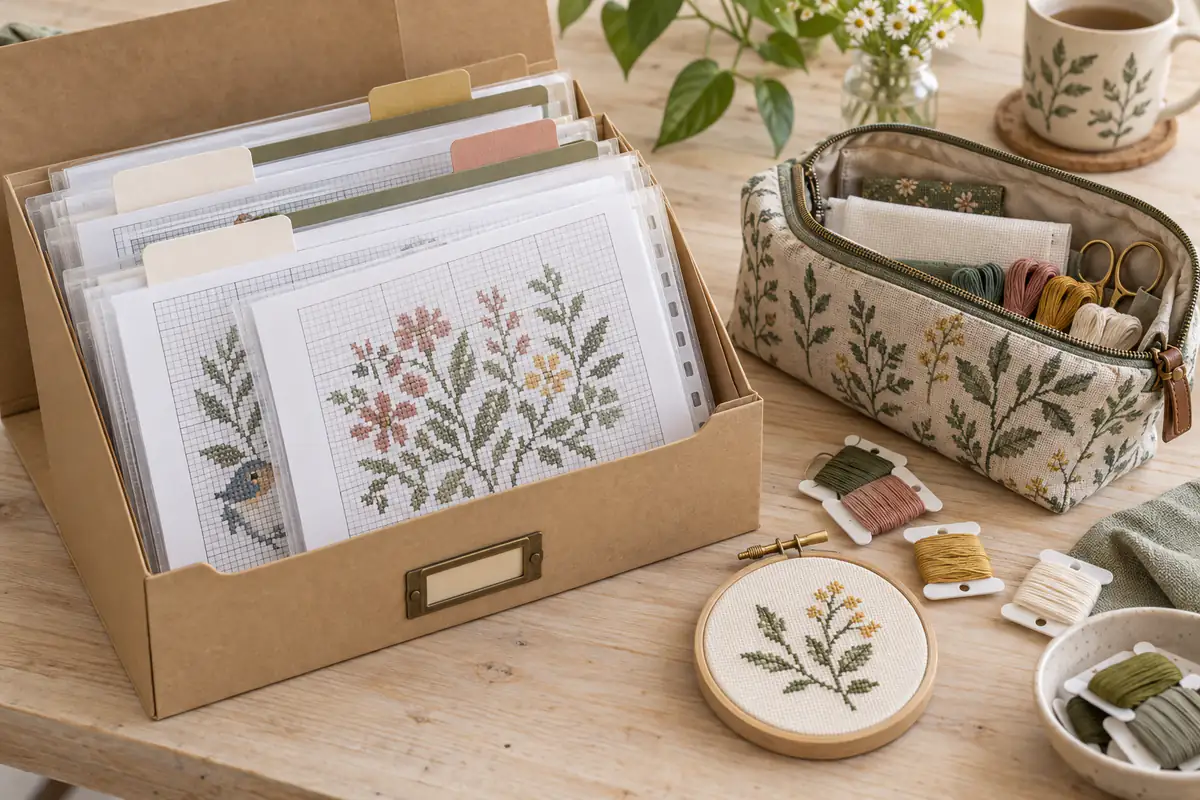
Save the original file under a descriptive name and keep related pages together. Include the designer or source, project title, stitch dimensions, and date of download in your notes if that information is available. A folder full of files named download or final-pattern can become difficult to use later. Preserve an unmarked copy before annotating a working PDF, especially if your viewer saves highlights directly into the document.
Organize by a practical category you will remember, such as cards, mini flowers, lettering, or seasonal projects. Add a short note about why you saved the chart. Perhaps it fits a particular frame, uses a small palette, or teaches a technique you want to try. This is more useful than collecting hundreds of files without evaluating them. If you adapt colors or fabric count, save the adaptation notes beside the original rather than silently replacing the source information. You can then reproduce the result or troubleshoot a size mismatch without relying on memory months after the download.
Recognize common warning signs without assuming every mistake is fraud
Missing dimensions, contradictory legends, unreadable symbols, and a preview that does not resemble the chart are reasons to pause. A polished marketing image can coexist with an unusable file. Likewise, an attractive AI-generated embroidery illustration is not evidence that a consistent stitch grid exists underneath it. Look for actual chart data and a sample of the exported pages. You should be able to explain how each visible symbol maps to a color and where the section belongs in the complete design.
An occasional typo can be corrected by the publisher, so check for updates or a contact method when something is unclear. Do not invent the missing information and assume the result will match the cover. Our editorial photographs are clearly distinguished from actual pattern previews, which are rendered from the chart's cells. The chart generator guide explains that difference in more detail. A trustworthy working pattern does not need exaggerated claims; it needs clear instructions, accurate dimensions, and a complete relationship between preview, grid, and legend.
A practical first download to evaluate the whole workflow
Choose one modest pattern and take it from download to a prepared project kit. The Meadow Bloom chart is a useful example because its color areas and open background are easy to inspect. Open the PDF, identify the full dimensions, and locate the symbols in the legend. Print the chart page in your preferred color or black-and-white format. Check that you can read it comfortably under the light you will use for stitching.
Next, calculate fabric with the intended count and margins, gather the corresponding threads, and mark a sensible starting position. Keep the source file, chart, and material notes together. This short preparation exercise tells you whether a free-pattern source is practical for your needs. Once you have completed a small project, you can make a more informed choice about larger downloads. The aim is not to own the biggest collection of charts. It is to find complete, original or properly licensed designs that you can understand, prepare, and enjoy stitching.
Cross stitch fabric size calculator · Download the original meadow bloom pattern
Examples, diagrams and planning estimates are original Cross Stitch Creator content.