
A measured swatch is a better basis for yarn planning than a blanket-size label alone. Stitch density and yarn construction can change the amount required dramatically.
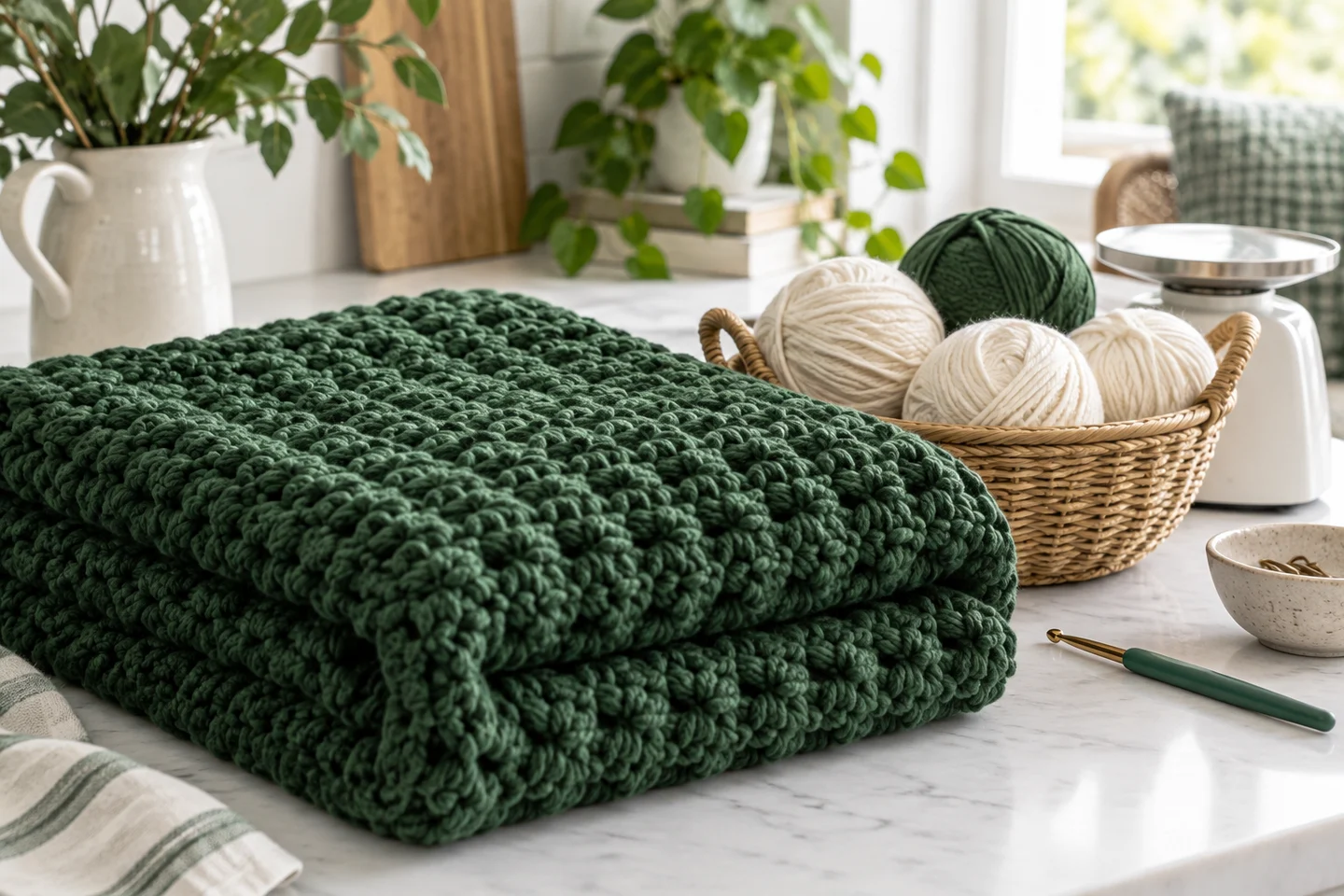
Make the right sample
Use the same yarn, hook and stitch pattern you plan for the blanket. Include colorwork or textured stitches if they form a meaningful part of the design. Wash and dry the swatch appropriately, measure its area and weigh it on a suitable scale. A very small swatch may be too light for an ordinary kitchen scale to measure reliably.
Scale by area
Divide the blanket area by the swatch area, then multiply by the swatch weight. A 15 × 15 cm swatch weighing 12 g suggests 640 g for a 100 × 120 cm panel before extra allowance. This assumes the same construction and tension throughout. It is not reliable for a blanket with very different dense and open sections unless each is estimated separately.
Add the missing work
Borders, joins, tassels and color changes use yarn that may not be represented by the central swatch. Add an allowance and consider estimating large borders as separate areas. Convert the total weight to balls using the label’s ball weight, or to length using its meters per ball. Round the purchase upward to complete balls.
Treat the result as a range
Personal tension and finishing can vary during a long project. The yarn estimator shows a planning quantity and a working range, not a guarantee. Buy matching dye lots where relevant and check the seller’s return policy before overbuying. Use the blanket-chain calculator separately for width and stitch-repeat compatibility.
Start with the blanket you intend to make
A yarn estimate needs a target width, target height and a representative fabric sample. A blanket's name, such as throw or baby blanket, does not define one universal size. Write the intended dimensions explicitly and decide whether they include a border. Then identify the stitch pattern, yarn and hook you plan to use. A dense textured fabric and an open lace fabric can consume very different quantities even when the finished rectangles have identical dimensions.
Use the crochet yarn calculator to scale from a measured sample rather than treating a generic ball count as a guarantee. The sample should use the same materials and stitch structure as the planned blanket. If you have not settled on the fabric yet, make a few small candidates and compare their drape as well as their consumption. The gauge and finished-size guide explains how to establish measurements that support both the dimension plan and the yarn calculation.
Make a representative sample large enough to weigh
A very small swatch may weigh too little for a household scale to measure reliably. It can also contain an unusually high proportion of foundation and edge stitches compared with the blanket's main fabric. Make a sample large enough to contain several complete repeats and a useful interior measuring area. Work in your normal rhythm rather than deliberately tightening or loosening the stitches to influence the estimate. Record the hook, yarn and stitch pattern with the sample.
Measure the fabric after the care process intended for the finished item, following the yarn's instructions. Let it dry completely before weighing. Water retained in a damp swatch makes a mass-based estimate misleading. Note whether the weight includes tails or any added border. Consistency matters more than pretending the measurement is exact to a fraction your scale cannot reliably detect. If the swatch is close to the scale's smallest increment, a larger sample can provide more useful evidence than repeatedly weighing the same tiny piece.
Scale by area with consistent units
For a rectangular sample, multiply its width by its height to obtain its area. Divide the blanket's planned area by the sample area, then multiply that ratio by the sample's yarn consumption. For example, a twenty-by-twenty-centimeter swatch has an area of four hundred square centimeters. A hundred-by-hundred-centimeter center has an area of ten thousand square centimeters, which is twenty-five times larger. If the representative swatch used a known mass, multiply that mass by twenty-five for a starting estimate.
Use the same units for both rectangles. Do not combine a swatch measured in inches with a blanket measured in centimeters without converting first. The calculation assumes that the sample represents the main fabric throughout the blanket. It does not automatically account for a different border, colorwork tails or unusual construction. The yarn estimation tool makes the arithmetic convenient, but the quality of its result still depends on the physical sample and clearly defined project dimensions supplied to it.
Convert mass to length using the actual yarn label
Yarn packaging often states both the ball mass and its approximate length. Those values let you convert an estimated mass into a planning length for that specific product. If a ball contains a given number of meters per hundred grams, scale that ratio to your calculated mass. Do not transfer the same meters-per-gram assumption to a different yarn simply because the two products have a similar thickness. Fiber composition, construction and density can change the relationship.
When buying, use the quantity and units printed on the actual product listing or label. A skein, ball or cake is a package format, not a standardized amount. Round the number of packages up after adding a practical reserve, and consider how the project divides among colors. The gauge guide is useful if you change yarn, because the substitute may alter both consumption and finished size. A new sample is safer than assuming equal package weight means equal fabric or equal yardage.
Estimate borders as their own fabric
A border can contribute a meaningful amount of yarn, especially when it is wide, dense or worked around a large perimeter. Do not assume the center's area ratio covers it unless the sample and target dimensions deliberately include the same construction. Estimate the border separately using a representative sample or a measured section of its actual stitch pattern. Keep its color allocation distinct if it uses a different yarn from the center.
One useful approach is to test the border on the swatch, measuring or weighing the yarn added. Record the perimeter covered and the number of rounds, then use that as a planning reference while acknowledging that corners and scale can affect the result. If the border is itself a substantial area, model its outer rectangle minus the inner rectangle and use an appropriate sample. The blanket chain tool supports center planning, but a complete material estimate also needs the edge structure you intend to add afterward.
Allocate yarn by color rather than only in total
A striped blanket may have a straightforward overall estimate but still run short of one color if the allocation is uneven. Plan the number of rows or areas assigned to each shade, including any border and joining work. For equal stripes in a consistent stitch pattern, proportional estimates may be reasonable. For motifs, textured sections or different stitch types, sample or measure those components separately because equal visible area does not always mean equal yarn consumption.
Keep enough reserve for color changes and the ends that must be secured. Many short stripes or separate motifs create more tails than one continuous-color rectangle. If consistency between dye lots matters, plan the main purchase together when practical and retain labels. Do not combine all colors into a single rounded ball total and assume it covers each individual requirement. A project with plenty of leftover cream can still stop because the final dark stripe needs more yarn than its initial allocation allowed.
Add a reserve for uncertainty and working losses
A calculated estimate is not an exact promise. Tension changes, knots, damaged lengths, joins, corrections and measurement error can all affect consumption. Choose a reserve appropriate to the project rather than treating the smallest theoretical result as a guaranteed requirement. The reserve should be explicit in your notes so you know whether a later number already includes it. Adding it twice can overstate the purchase, while forgetting it entirely can leave no flexibility near the final rows.
Consider the practical cost of obtaining more yarn later, particularly if the product or color may be difficult to match. At the same time, avoid presenting a universal percentage as correct for every blanket. A measured sample and a clear construction plan reduce uncertainty more effectively than an arbitrary large allowance. The crochet gauge calculator can help verify the planned dimensions before purchasing. If the target size changes, recalculate the area and color allocations rather than assuming one extra ball will always cover the difference.
Reassess consumption while the blanket is still small
After completing a representative section, compare the actual yarn used with the estimate. Weigh the remaining supply or record completed packages consistently, and measure the fabric produced. If the project is using more yarn per area than the swatch suggested, investigate whether the gauge, stitch pattern or dimensions differ. Discovering that early gives you options: obtain more matching yarn, revise the border, or adjust the target dimensions before most of the work is complete.
Keep the final measurements and actual consumption after finishing. Note the yarn product, hook, stitch pattern, prepared gauge, blanket dimensions and amount left over. That record can improve future estimates for similar projects, although a materially different yarn or construction still needs a new sample. The yarn calculator is a planning partner to these observations, not a replacement for them. Combining a representative swatch, separate border and color calculations, and an early progress check gives you a practical material plan that can adapt to the real fabric as it grows.
Examples, diagrams and planning estimates are original Cross Stitch Creator content.