
Crochet trends in 2026 favor useful small projects, modern modular colorwork, expressive texture and lighter wearable fabrics. Treat trends as inspiration rather than rules: the best project still fits your time, materials and everyday life.
What are some trending crochet patterns for 2026?
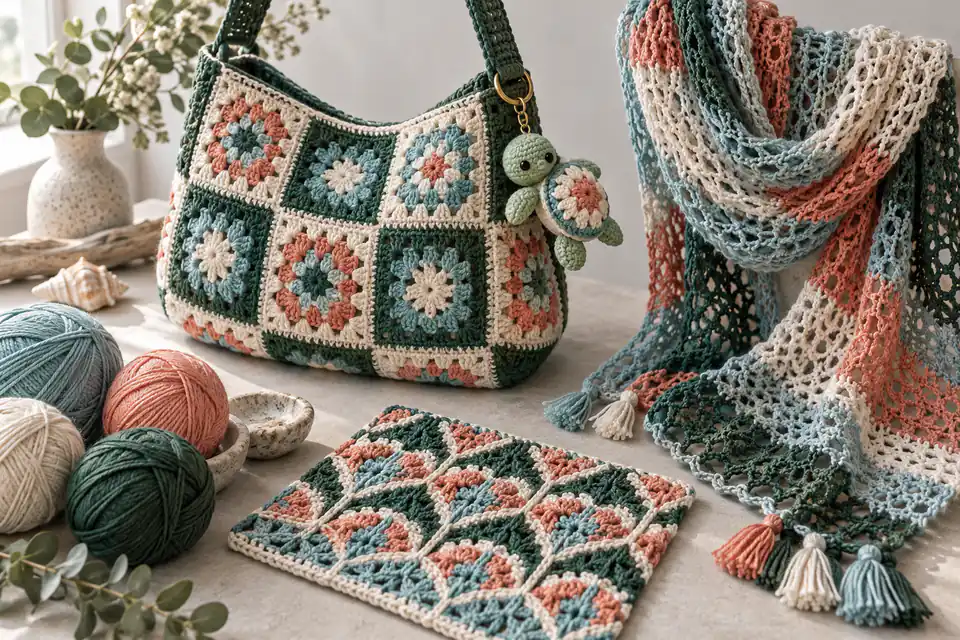
The strongest 2026 pattern themes are modular granny-square pieces, compact accessories, small charms and amigurumi, mosaic colorwork, textured home accents and openwork wearables. These ideas appear in different forms because they are easy to personalize: a square can become a bag or vest, a motif can use scraps, and a small charm can be completed without a large yarn budget. Trend reports are snapshots, not universal sales data, so choose a pattern for its construction and usefulness rather than its label. Before starting a modular project, use the crochet gauge calculator to make sure separate pieces will join at the intended size. A current color palette cannot rescue squares that differ significantly in dimensions.
What crochet items are trending for 2026?
Wearable accessories and practical small objects are especially visible: bandanas, narrow scarves, textured hats, mini bags, phone pouches, key charms and decorative brooches. They offer a manageable way to try a new stitch or color combination. For the home, cushion covers, baskets and smaller throws allow bold texture without committing to a room-sized blanket. Openwork tops and vests continue to suit layered wardrobes, while modular construction makes fit adjustments easier to visualize. The important distinction is between online visibility and demand in a particular market. A project can be widely photographed yet sell poorly at one event. If you plan inventory, make a small batch, record time and materials, and test real customer interest before producing more.
Is crocheting popular now?
Crochet remains highly visible in fashion, home décor and short-form craft content, and its appeal is broader than one age group or style. The technique works for quick handmade accessories as well as long, meditative projects. Visibility, however, does not prove that every crochet product or pattern is growing at the same rate. Interest changes with season, platform and region. Use trend language carefully: “popular now” describes what people are making, sharing or searching for, not a guaranteed business result. The durable part of the interest is personal customization. Makers can change color, size, texture and function with basic tools, which is one reason granny modules, simple bags and small gifts repeatedly return in new forms.
The modern granny-square revival
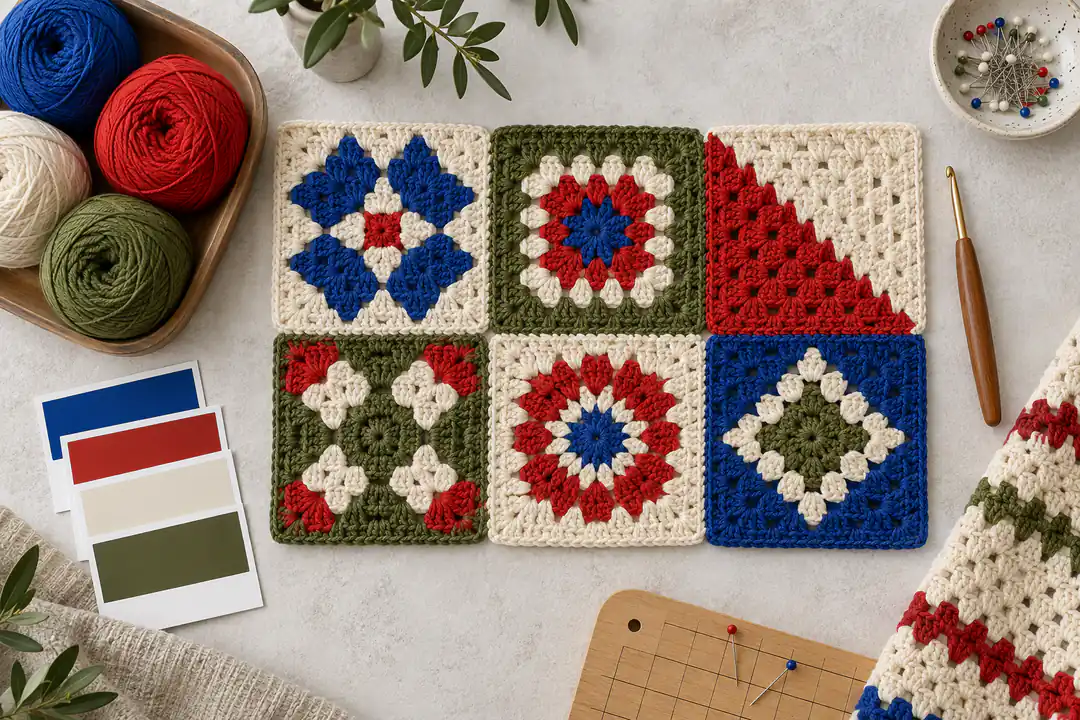
Granny squares in 2026 are less about reproducing one vintage blanket and more about controlled modules. Designers vary scale, negative space, border width and color placement, then assemble squares into structured bags, cardigans, vests and cushion fronts. A restrained palette can make the geometry feel contemporary, while one bright accent preserves the handmade energy. Plan the finished object before making a stack of motifs: count pieces, map their orientation and decide how seams or joins affect width. Block a representative square and measure it after drying. If each square is only a few millimeters larger than planned, the difference multiplies across a garment. Use the crochet gauge guide to connect module size with the final dimensions.
Mosaic and graphic colorwork
Mosaic crochet offers strong geometric surfaces while often working one color at a time per row. That visual clarity makes it a natural fit for bags, cushions, wall pieces and statement borders. The technique still demands careful counting, consistent edge treatment and an understanding of overlay or inset construction. Start with a swatch that contains the real repeat and border rather than a few plain rows. Choose colors with clear value contrast so the motif remains visible from a distance and in photographs. Our mosaic crochet generator can help explore block placement, but a generated chart remains a planning aid: test the chosen technique, turning method and yarn behavior before scaling it into a full project.
Small charms and no-sew amigurumi
Compact animals, food motifs and bag charms match the appetite for quick, collectible makes. No-sew construction reduces assembly by building limbs or features into the rounds, but it does not automatically make a pattern beginner-level. Tight stitches, small hooks, shaping and accurate marker placement can be demanding. Safety also matters: attached eyes and small parts are not suitable for every recipient, especially young children. Embroidered features may be a better choice. If you make charms to sell, calculate the hidden time spent stuffing, finishing, photographing and packaging. A tiny project can have a high labor cost relative to its yarn use, so price from the whole process rather than from material weight alone.
Lightweight and openwork wearables
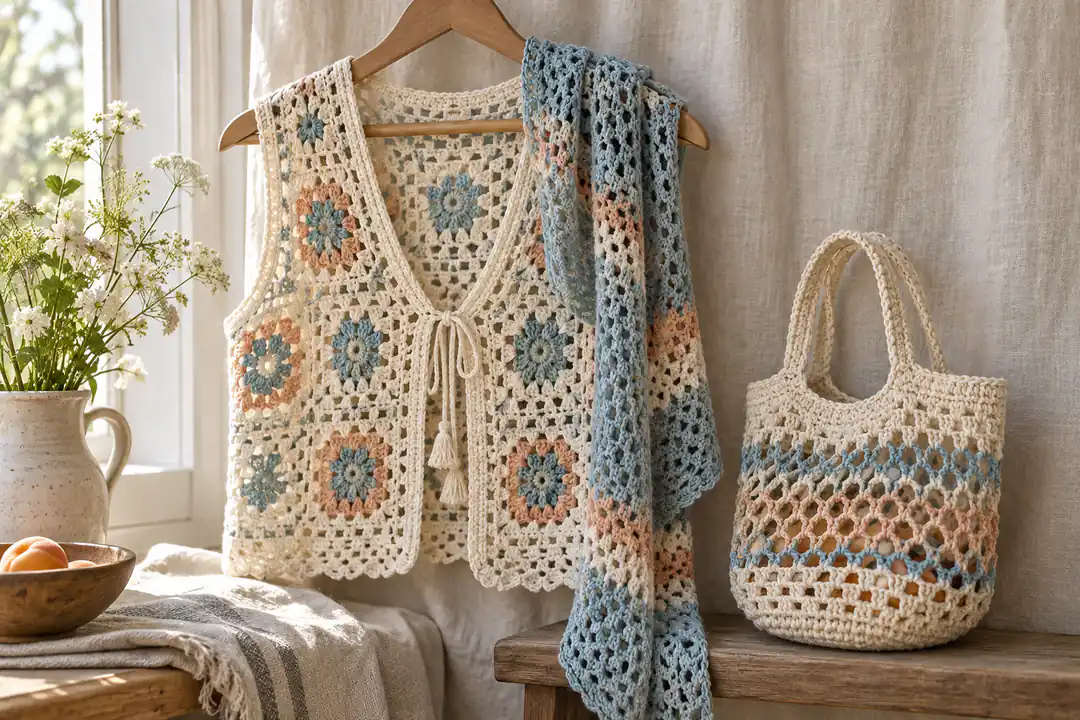
Open grids, lace-like shells and mesh fabrics suit layered tops, summer scarves and transitional vests. The current look often relies on drape and negative space rather than a dense field of elaborate stitches. Yarn choice controls the result: the same chart can feel crisp in plant fiber, soft in a blend or heavy when the yarn is too thick. Make and wash a generous swatch, then hang it briefly to see whether gravity changes the length. Measure garments against actual body and finished dimensions rather than choosing only by a familiar size label. Use the hook converter for notation differences, while treating the pattern’s recommended hook as a starting point that must be checked against your fabric.
Texture that reads clearly
Puff stitches, bobbles, ribs, raised lines and sculptural borders add shadow that shows well in neutral colors. In 2026 they are often used selectively—a textured panel, cuff or cushion front—rather than covering every surface. This controls weight and yarn use while giving the project a focal point. Dense texture can consume considerably more yarn than an open stitch at the same dimensions, so weigh a representative swatch. Compare it with a plain alternative using our crochet yarn estimator. Texture also changes care: deep stitches take longer to dry, and raised loops can snag in high-use items. Choose the placement according to the object, not only the close-up photograph.
Scrap yarn and slow-fashion projects
Scrap-led crochet is moving from random leftovers toward planned palettes and useful formats. Makers group yarn by fiber, weight or color family, then use modular motifs, stripes and small accessories to consume it deliberately. This approach reduces waste only when the result is wanted and durable. Mixing fibers can change washing behavior, stretch and surface wear, so label uncertain yarn and test combinations. Slow fashion also means repairable construction, comfortable fit and realistic care. A cardigan made from many replaceable squares can be easier to mend, but it still needs secure joins and enough yarn reserved for future repairs. Record hook size, gauge and color placement so the project can be maintained rather than treated as a one-season novelty.
What is the highest-selling crochet item?
There is no reliable universal answer. Sales rankings differ across marketplaces, craft fairs, countries, seasons and price points, and public trend lists rarely include complete, comparable transaction data. Bags, plush items, hats and small gifts can all perform well in particular settings, but none is guaranteed to be the highest-selling crochet item for every seller. If you want evidence for your own business, test three to five designs in small quantities. Record views, inquiries, conversion, material cost, active work time and profit after fees. Separate what attracts attention from what customers actually buy. Also check local product-safety, labeling and tax requirements. A realistic product line grows from your numbers and repeatable quality, not from a broad online claim.
How do I choose a trend without wasting yarn?
Begin with the use case: who will wear or use the object, in what season, and how will it be washed? Next choose one trend element—shape, texture, modular construction or color—rather than combining all of them. Make a full repeat swatch, wash it and calculate the finished dimensions and yarn requirement. For a blanket or large panel, the blanket chain calculator helps reconcile width with stitch repeats. Photograph the swatch in ordinary light and live with it for a day before buying a project quantity. If the trend fades, a functional shape and a palette you genuinely like will still make the project worthwhile.
A practical 2026 project plan
Choose one small experiment and one lasting project. The experiment might be a charm, headband or single mosaic panel that teaches the technique quickly. The lasting project might be a modular bag, openwork vest or textured cushion whose size and materials you have tested. Save the pattern source, note any terminology differences and calculate the yarn from a representative swatch. If you are new, start with easy crochet patterns for beginners; if the chart looks unfamiliar, use how to read a crochet pattern. Trends are most useful when they give you a reason to learn one clear skill. Finish that skill in an object you will use, then decide whether it deserves a larger version. Keep a short project record with yarn, hook, washed gauge, actual time and changes. That evidence helps you repeat a successful make and shows whether a fashionable idea suited your routine. Review the object after several uses: comfort, care and durability are better guides for the next project than first-day photographs. A trend becomes personally valuable when it adds a technique or object you want to keep.
Examples, diagrams and planning estimates are original Cross Stitch Creator content.