
Easy crochet patterns for beginners use familiar stitches, visible yarn and construction that is simple to check. Your first project should teach a repeatable process and reach a useful finish before fatigue or confusion takes over.
What is the easiest crochet pattern for a beginner?
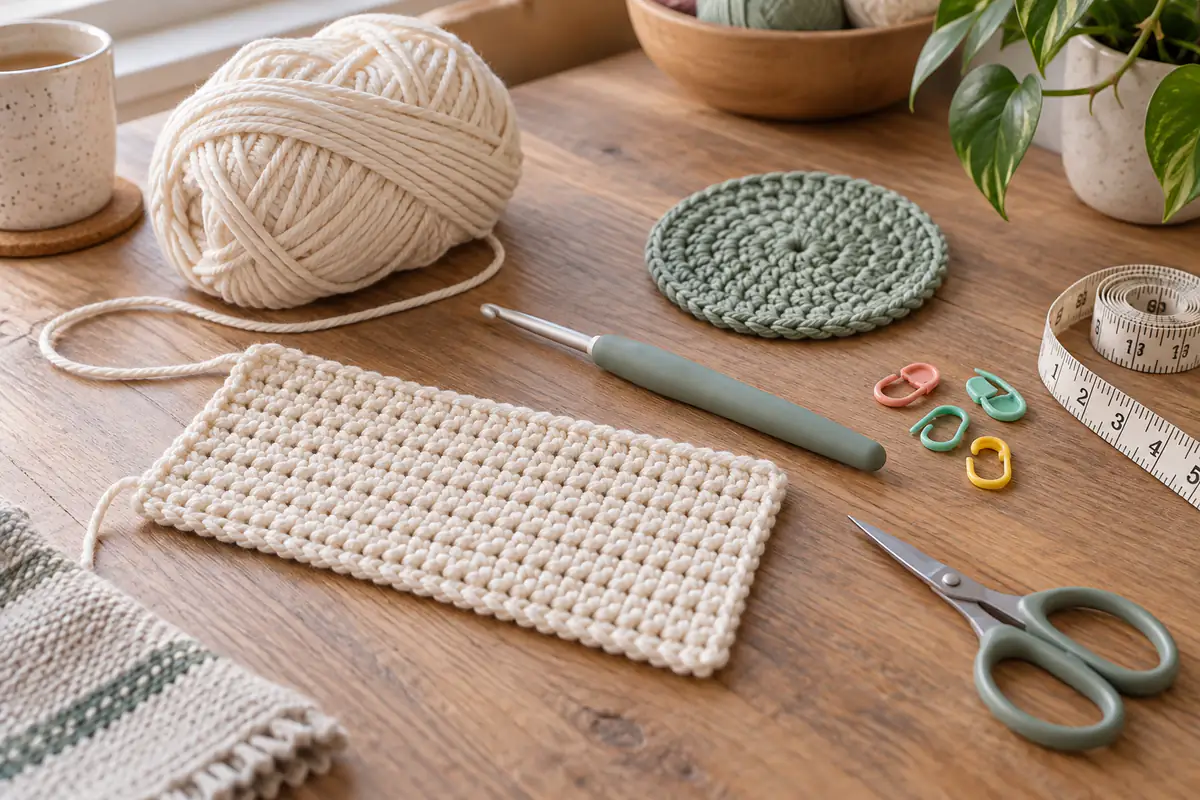
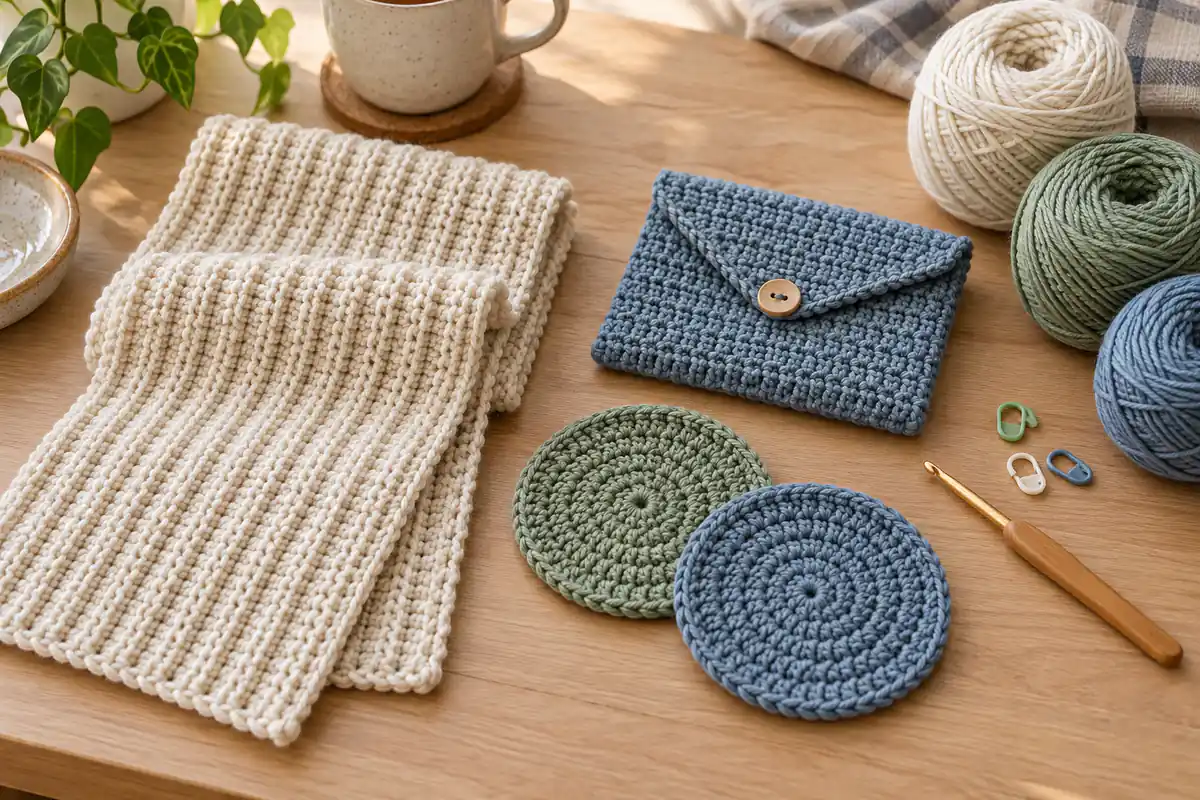
A flat rectangle made in one basic stitch is usually the easiest pattern to understand. A washcloth, coaster set, simple scarf or small pouch panel lets you practice the foundation chain, first row, turning and consistent edges without shaping several pieces. Choose a pattern that states its terminology, hook, yarn weight, gauge and finished measurements. Light-colored smooth yarn makes each loop visible; very dark, fuzzy or novelty yarn hides mistakes. The easiest project is not necessarily the smallest. Tiny toys use little yarn but may require tight tension, continuous rounds, shaping and assembly. Start with rows you can count, then move to a tube or circle when you can identify the first and last stitch reliably.
What is the first thing a beginner should crochet?
Crochet a square or short rectangle that can become something even if the measurements are imperfect. A coaster, cloth or cup sleeve turns practice into a finish, and repeating the same piece reveals whether your tension is becoming steadier. Begin with a medium-weight smooth yarn and a hook that feels comfortable rather than forcing the smallest recommended size. Use our hook size converter if the pattern and hook use different systems. Before the project, make a small practice chain and several rows. Count every row, mark the edge stitches and learn what the top loops look like. That ten-minute sample prevents the common problem of a rectangle slowly losing or gaining stitches.
Do you need talent to crochet?
Crochet depends far more on learned movements and observation than on an inborn talent. At first, one hand manages yarn while the other controls the hook, and the eyes must recognize loops that all look similar. That coordination becomes easier through short, calm repetition. Progress is not perfectly linear: changing yarn texture or stitch pattern can make an experienced beginner feel awkward again. Treat errors as information. A narrowing edge suggests missed stitches; a widening edge suggests accidental additions; a stiff fabric may indicate tight tension or an unsuitable hook. Photograph your first and fifth swatches under the same light. Visible improvement is a more useful measure than comparing your first afternoon with someone else’s finished portfolio.
How long does crochet take to learn?
Many people can make chains and basic stitches in one or two practice sessions, but comfortable tension, accurate counting and confident pattern reading take longer. The timeline depends on session length, instruction quality, hand comfort and the techniques in the chosen project. Aim for twenty or thirty focused minutes, then stop before strain makes your grip tighter. Repeat one stitch long enough to recognize it without guessing. A basic rectangle may be achievable in a weekend; a fitted garment or shaped toy requires additional skills even if the individual stitches are familiar. Learning is better measured by tasks—holding yarn comfortably, finding the edge stitch, reading a repeat—than by a promise that everyone will be proficient after a fixed number of days.
Which basic stitches should I learn first?
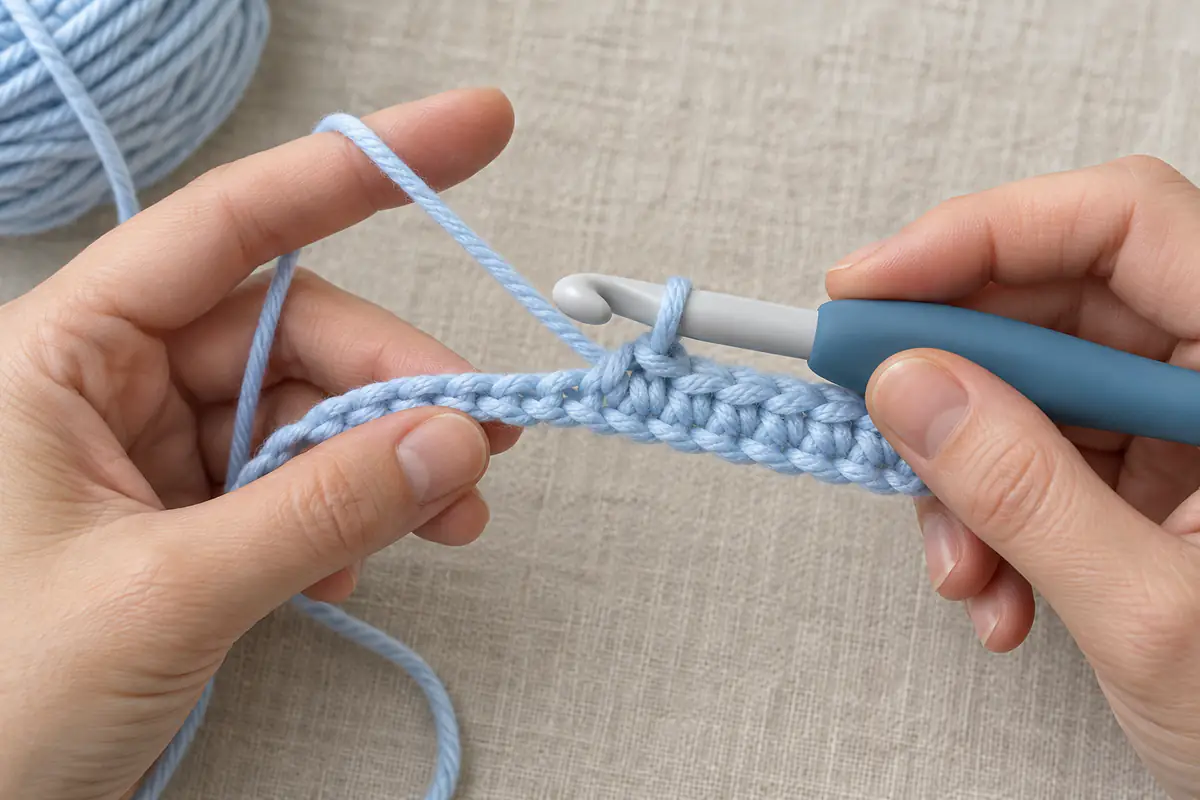
Learn the chain, slip stitch and the most common basic stitches in the terminology used by your pattern. In US terms, single crochet makes a compact fabric, half double crochet adds height, and double crochet grows faster with more openness. UK names differ, so always check the abbreviation key. Practice recognizing the top V of each stitch and the turning chain at the edge. Make small labeled swatches rather than changing stitch every row; consistent samples reveal differences in height, density and yarn use. Once rows are straight, practice increasing and decreasing. Those operations create most basic shaping. A decorative stitch is easier to learn after you can count its underlying groups and identify where the next hook insertion belongs.
How do I choose beginner-friendly yarn and a hook?
Select smooth yarn with clear plies in a light or medium color. Medium yarn is often easier to see and hold than laceweight yarn, while very bulky yarn can make insertion points harder to identify. Read the label for fiber, care, length and a suggested hook range, but let the pattern gauge and your swatch determine the final hook. Ergonomic handles can reduce pressure for some hands; the important point is a relaxed grip. Avoid buying a large set before you know which handle and shaft style you prefer. If you substitute yarn, compare weight category and length per standard ball, then check the resulting fabric. The yarn weight chart helps interpret categories without pretending that all yarns in one category behave identically.
How do I keep the edges straight?
Count stitches at the end of every row and place a marker in the first or last stitch when the edge is hard to see. Decide whether the turning chain counts as a stitch according to the pattern; there is no single rule that overrides the written instructions. After turning, pause and identify the first valid insertion point. At the other edge, spread the final stitches with your fingers so the last one is not hidden. Count groups as well as individual stitches in a repeating pattern. If the width changes, undo the short incorrect section instead of adding a compensating stitch later. Straight edges come from consistent placement, not from pulling the yarn tighter. A small tally beside each completed row can prevent both missed rows and accidental repeats.
Should a beginner start with rows or rounds?
Rows are usually easier because the beginning, end and width remain visible. They teach turning chains, edge stitches and how stitch height affects fabric. Rounds introduce joining, continuous spirals or both, plus the need to mark the start. After one rectangle, try a simple circle or tube using a visible stitch marker. Read whether the pattern says to join each round or continue without joining; mixing the methods changes the seam and stitch count. For a spiral, move the marker into the first stitch of every new round. For joined rounds, identify the joining slip stitch and the first worked stitch separately. Mastering this distinction prepares you for hats, baskets and amigurumi without asking the first project to teach every skill at once.
Is crochet or knitting easier?
Neither craft is universally easier. Crochet uses one live loop and one hook, which some beginners find easier to pause and repair. Knitting places many live loops on needles and creates a different fabric structure that may suit garments or preferences better. The motions, terminology and common mistakes differ. If you already have tools or a project you love, that motivation can matter more than abstract difficulty. Try a small sample of each if you are undecided. Choose crochet when the hook movement and fabric appeal to you, not because someone promises that every technique will be simple. Within crochet itself, a basic rectangle is much easier than lace, colorwork or a fitted garment, so compare equivalent starter projects rather than the most advanced examples of either craft.
How do I read an easy pattern before starting?
Read the complete pattern once without crocheting. Circle the chosen size, identify US or UK terminology, and list every abbreviation. Find the stitch multiple, turning rule, repeat markers and expected count at the end of each row. Then read our detailed guide to how to read a crochet pattern. Check whether measurements are taken before or after washing and whether pieces need seaming. If a step is unfamiliar, practice it separately. A beginner-friendly pattern should not make you guess where a repeat ends or how parts are assembled. Write the expanded meaning of abbreviations in the margin and use a row counter or paper tally. Preparing the instructions reduces cognitive load so your hands can focus on making consistent stitches.
How can I prevent hand fatigue and frustration?
Sit with shoulders relaxed, support the forearms and keep the work near a comfortable viewing height. Loosen a grip that leaves marks in your fingers or squeaks the hook against the yarn. Take frequent breaks and stop if you feel persistent pain, numbness or tingling. Short sessions also improve learning because repeated strained motions reinforce tension. Use good light and contrast between yarn and background. When a row goes wrong, put the hook through the live loop or use a locking marker before setting the work down. Return by counting the last correct row, not by guessing. Frustration often comes from losing the working state, so a simple note with row number, stitch count and next instruction makes the project easier to resume.
A five-step first-project plan
Choose a flat useful project with one repeating stitch. Gather one suitable yarn, one comfortable hook, scissors, a yarn needle and two markers. Make a swatch, count it and decide whether the fabric feels right; use the crochet gauge calculator when size matters. Read the pattern fully, mark its terminology and repeats, then work in short sections while checking stitch count. Finish by weaving ends securely and washing according to the yarn label. Write down what you changed and what you would do differently. For project two, keep either the yarn type or construction familiar while adding one new skill, such as a simple border or working in rounds. That gradual sequence builds competence faster than collecting many unfinished advanced patterns.
Examples, diagrams and planning estimates are original Cross Stitch Creator content.