
Free crochet patterns in PDF format are useful only when the file is complete, readable and shared by someone entitled to distribute it. This guide shows where to look, what to check before downloading and how to build a pattern library you can actually use.
Where can I find free crochet patterns in PDF format?
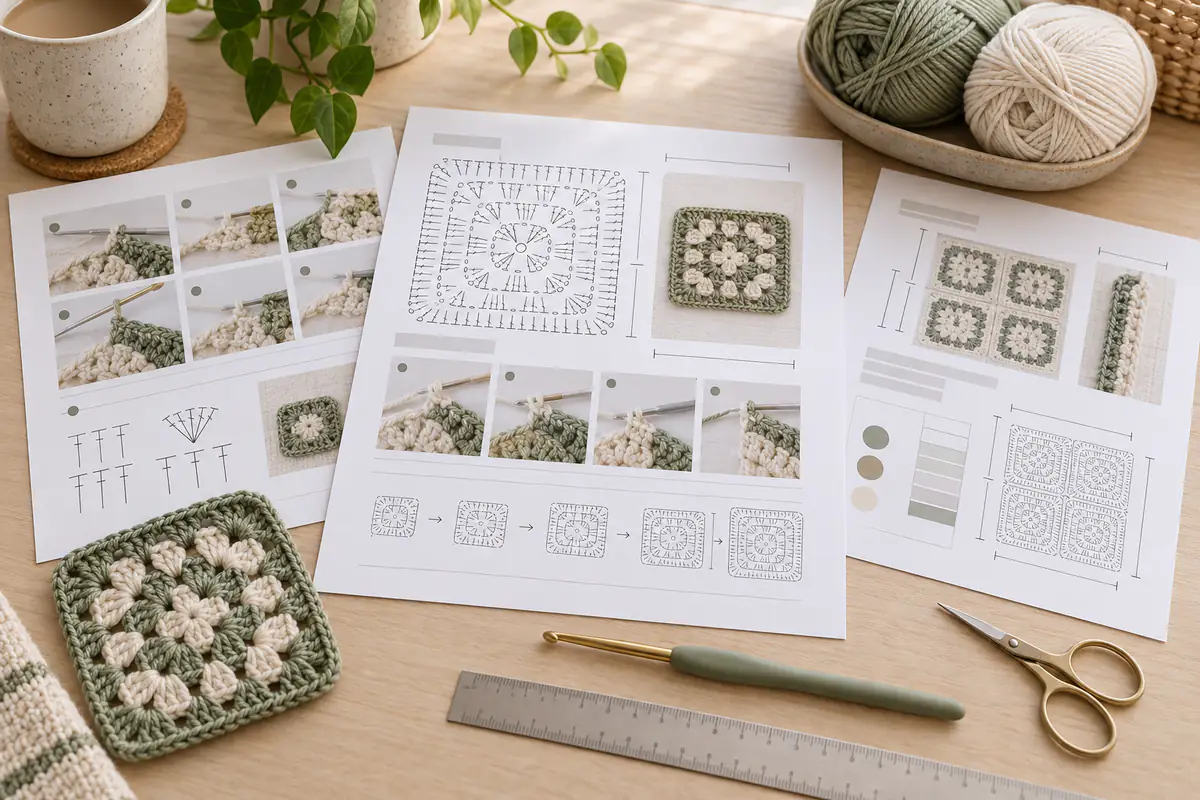
Start with original designer pages, established yarn or craft organizations, public libraries and clearly identified pattern collections. A reliable source names the designer, shows the finished project and explains what the download contains. Search results and social posts can help you discover a design, but follow them back to the original page before saving a file. That step gives you the current version, the designer’s notes and the actual terms of use. On this site, our crochet planning articles and free tools are available without checkout; begin with the crochet gauge calculator when a pattern lists a target tension. A PDF link should open or download the promised document directly. If it redirects through unrelated pages, asks for browser permissions or installs software, leave it and find the original source instead.
Where can I find all free crochet patterns to download?
There is no trustworthy single archive containing every free crochet pattern. Patterns belong to many independent designers and publishers, and “all patterns” pages often mix legitimate downloads with copied files, expired links and previews that are not complete instructions. Build a focused collection by project type, skill level and yarn weight. Save the source page with the PDF so you can return for corrections. If you want a blanket, check the measurements with our blanket starting-chain calculator and estimate supplies with the crochet yarn calculator before committing. A smaller, well-labeled library is more useful than hundreds of anonymous downloads. Record the title, designer, version date, terminology and license for each file; those details prevent confusion when similar filenames accumulate.
What should a complete crochet PDF include?
A usable PDF identifies the project, finished measurements, skill level, yarn quantity, yarn weight, hook size, gauge and every abbreviation used. It should explain whether the terminology is US or UK, because familiar stitch names can mean different things in the two systems. Instructions need a clear beginning, repeat markers, shaping directions and finishing steps. Charts should include a symbol key and enough resolution to zoom or print cleanly. Garments need sizing information and enough ease guidance to choose a size deliberately. Photos support the written instructions, but a photo alone is not a pattern. Before buying yarn, scan the whole document for missing pages, references to unavailable charts or unexplained special stitches. Use the hook size converter when the stated hook system differs from yours, and make a swatch instead of treating the suggested hook as a guarantee.
How do I check that a free download is safe?
Download from the page that explains the pattern rather than from an unfamiliar file mirror. A normal crochet PDF does not need an app, browser extension, password installer or access to your contacts. Check that the visible filename and file type match what the page promises. Keep your browser and PDF reader updated, and let the operating system scan downloads. Be cautious with shortened links and pages that imitate a download button several times. Safety also includes privacy: a genuinely free pattern should not demand payment-card details merely to open a file. An optional newsletter form can be legitimate, but the page should say clearly what you receive and how your email will be used. If the original page has disappeared, look for an authorized replacement or choose another pattern instead of downloading a repost with no provenance.
Are free crochet pattern books in PDF legal?
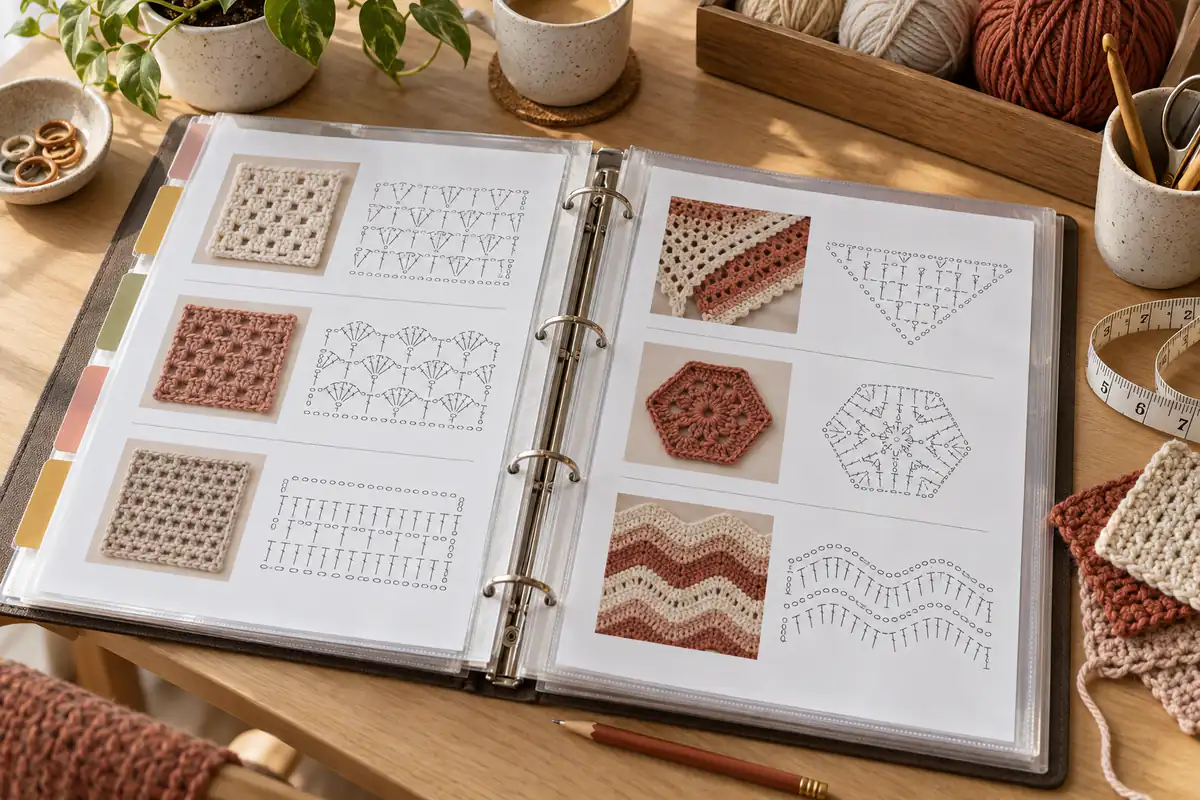
A book being easy to find online does not make the copy legal. Modern crochet books, magazines and paid patterns are normally protected by copyright, so a scan uploaded without the publisher’s permission should not become part of your library. Look for books released by their rights holder, lawful library lending, public-domain works or clearly licensed archives. Public-domain status depends on the work, edition and country; a new translation, photography or layout can have separate rights even when an older text is free. The safest rule is simple: use a publisher, author, library or archive that states why it may offer the file. Free individual patterns provide plenty of practice without relying on unauthorized book scans. Respecting the source also keeps corrections, sizing notes and designer support connected to the instructions you are using.
How can I tell whether a pattern fits my skill level?
Ignore labels such as “easy” until you inspect the actual techniques. List the stitches, construction method, color changes, shaping and finishing. A small toy with many tiny pieces can be harder than a large scarf made in one repeating row. Look for unfamiliar steps and test them on scrap yarn before beginning the project. Beginners usually benefit from light-colored, smooth yarn, a comfortable hook and a pattern with short repeats that are easy to count. Read our guide to easy crochet patterns for beginners before choosing a first download. If a pattern depends on exact size, the gauge swatch is part of the project. A clear pattern tells you where precision matters and where you can adapt length, color or edging without affecting the construction.
What should I verify before buying yarn?
Confirm the finished size, intended ease, yarn weight, total length or weight and the number of colors. Yarn names can disappear while the pattern remains online, so compare fiber, construction, length per ball and recommended gauge rather than matching only a discontinued brand. Check whether the quantity includes swatching, seaming, borders, fringe or alternate sizes. For a blanket, calculate from a representative swatch with our crochet yarn estimator; for fitted work, follow the designer’s sizing and make the stated gauge swatch. Buy matching dye lots when color consistency matters and keep a label with the project. A free pattern can still require a substantial materials budget, so planning before purchase is more valuable than collecting downloads you never start.
How should I print a crochet pattern?
Use print preview and select only the pages you need. Keep the title, materials, abbreviations and any chart key even when you omit decorative cover pages. Print at 100 percent when the file contains a scale box or full-size template; ordinary written instructions do not usually depend on print scale. Color is useful for charts, but symbols and line styles should remain distinguishable in grayscale. If the text is too small, use the PDF reader’s booklet or enlarged-page options rather than taking screenshots, which can blur charts. Write the source URL and download date on the printout. Put working notes on a copy, retain the clean original, and mark completed rows with a removable method that never hides the next instruction.
How do I organize downloaded patterns?
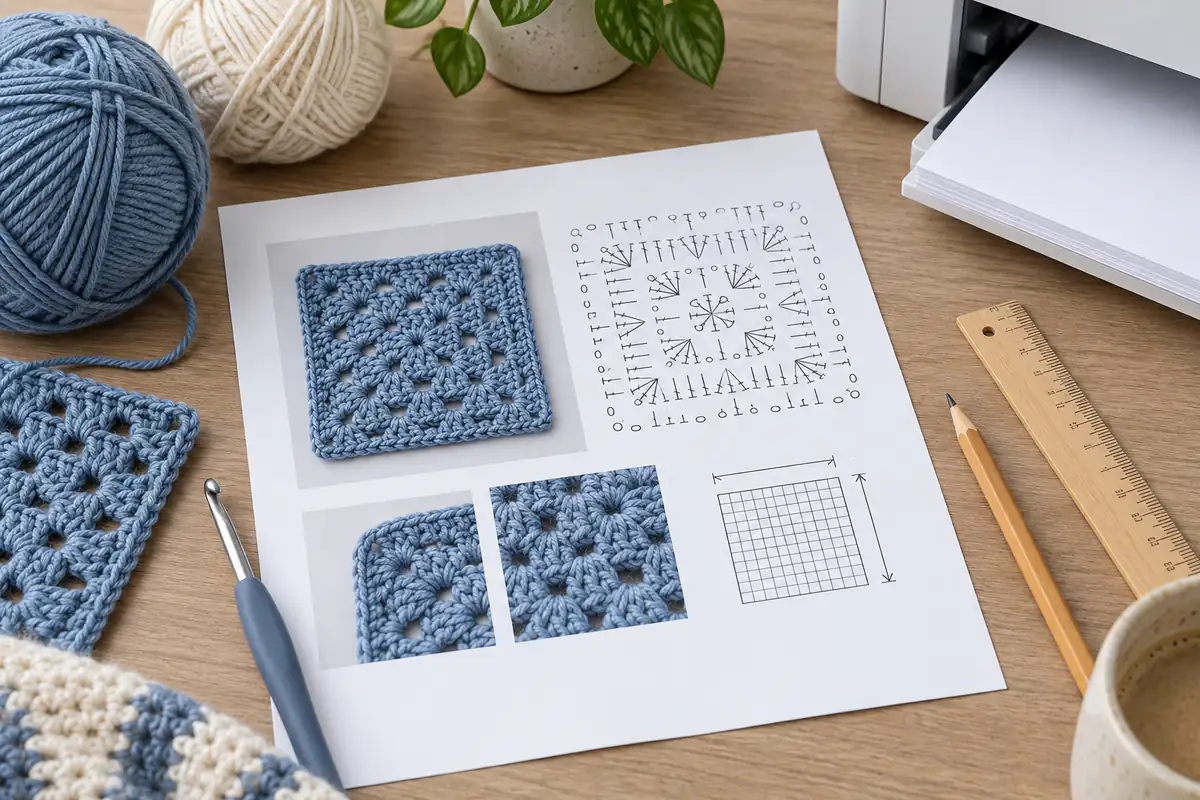
Choose filenames that remain meaningful outside the download folder: project, designer, size range and version date are useful. Store the untouched PDF in one folder and a working copy with your notes in another. Add simple tags for project type, yarn weight, construction and skill. Keep a small text note or spreadsheet with the source URL and license. Back up the library, but do not treat a private backup as permission to share the files publicly. Delete duplicates and incomplete previews so search results inside your folder stay useful. For each active project, keep the PDF, swatch measurements, yarn labels and adaptations together. That record is especially helpful if you return months later or want to make the item in another size.
Can I sell items made from a free pattern?
The answer depends on the designer’s stated terms and the law that applies where you operate. Some designers allow sales of finished handmade items with credit; others limit use to personal projects. The PDF itself must not be copied, uploaded or included with a product unless permission explicitly allows it. Read the license on the original page and inside the file, and contact the rights holder when the wording is unclear. Keep a copy of the terms that applied when you downloaded the pattern. Do not assume that “free” means public domain, and do not remove names or watermarks. If commercial use matters to your plan, choose a pattern whose permissions are clear before investing in materials and product photography.
What are the warning signs of an incomplete pattern?
Watch for instructions that begin midway through a row, reference a missing chart, omit abbreviation definitions or give materials without quantities. Garment patterns need finished measurements or a sizing schematic; toys need assembly and placement guidance; colorwork needs a chart or unambiguous written sequence. Repeated text that never explains turning chains, first-stitch rules or how repeats end can create cumulative errors. Compare the project photo with the listed sections: a visible border, closure or sleeve should have instructions somewhere. Search the source page for corrections and reader notes, but distinguish official errata from guesses. When essential information is absent, choose a different design rather than improvising through an expensive project.
A practical checklist for your next download
Before saving a file, confirm the original source, designer name, complete instructions, terminology, measurements, materials, gauge, abbreviations, charts and use terms. Open every page, check that images and symbols render, and give the file a searchable name. Before starting, read the pattern from beginning to end, highlight size-specific numbers and make the relevant swatch. Convert the hook only if needed with the hook size chart, then measure the actual fabric you create. Keep the source link with your notes and return for errata before a long or fitted project. This short routine answers the real question behind “Where can I find free crochet patterns in PDF format?”: choose fewer, complete patterns from accountable sources, then prepare them well enough to finish.
Examples, diagrams and planning estimates are original Cross Stitch Creator content.