
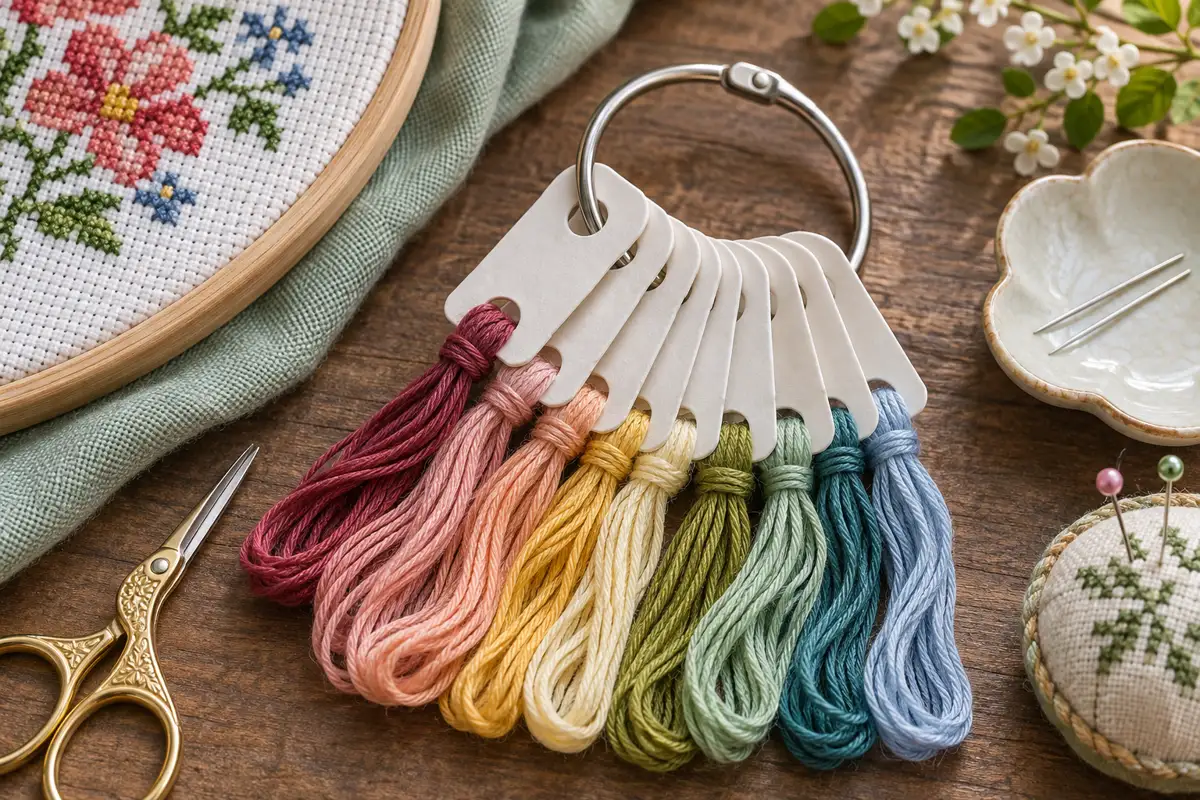
A floss drop is a small tag with a hole for a loop of embroidery floss. It holds cut lengths ready to use and gives you room to write the color number and the symbol from your chart. A ring of labeled drops is useful when several colors look alike or when you carry one project between rooms. Set up only the threads you expect to use soon, and keep the spare floss with its original label.
Label the drops before cutting
Write the manufacturer and color number on the front. Copy the chart symbol beside it. Keep both references: the symbol helps during stitching, while the number lets you identify leftover floss later. If a chart uses a blend, label that drop with both numbers and the number of strands of each. Keep the blend separate from its individual colors so you can refill it correctly.
Arrange the tags in the order that saves you the most looking up. For a small design, the order of the chart key works well. For a large project, separate frequently used colors from the ones that appear in only a few squares. Distinguish similar symbols in writing. A filled circle and an empty circle can be hard to read on a tiny tag, so write “solid circle” and “open circle” if necessary.
Load one drop and test the length
Start with a cut length of about 40 cm, or 16 inches, for ordinary stranded cotton. Fold the bundle in half and pass the fold through the hole. Pull the loose ends through the fold and snug the loop against the tag. To extract a strand, isolate one end and pull it gently while holding the rest of the bundle. If the whole bundle moves, loosen the loop and try again. Avoid overfilling the hole.
Adjust the length to suit your thread and technique. A short piece is easier to control when metallic floss frays, or when you need only a few isolated crosses. For a loop start using one strand folded in half, remember that a 40 cm strand gives roughly 20 cm of working length before you allow for the needle and the tail. Try a single drop before cutting all the floss. Keep variegated thread in sequence if the color transitions matter to the design.
Keep track of similar colors and spare thread
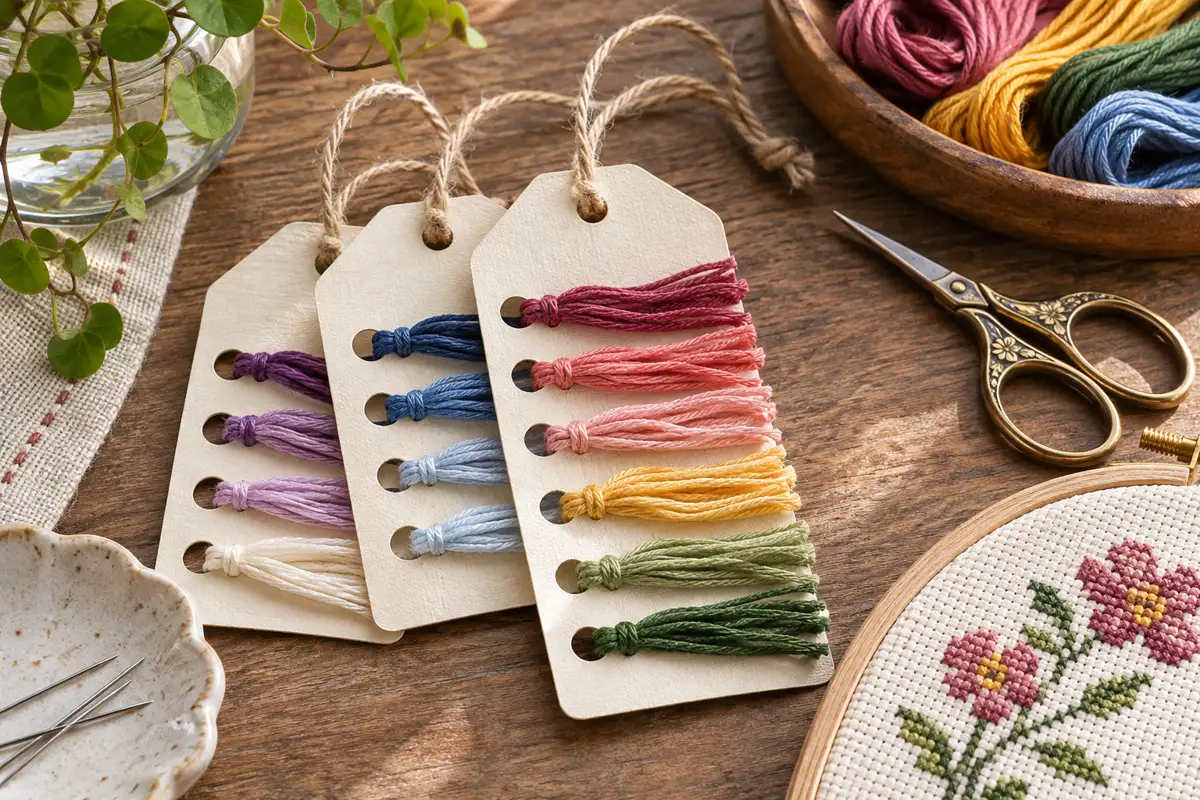
When you open a new skein, transfer its number to the tag before removing the paper label. If there is a lot reference you may need later, save it with the spare floss. Keep older or unlabeled strands apart until you can compare them in daylight. Two nearly identical greens may belong in different parts of the design, and switching between slightly different shades in a solid block can leave a visible line.
Return usable offcuts to a separate hole or a labeled pocket. Keep them apart from full lengths so you do not repeatedly pull a short piece by accident. If a color is nearly exhausted, count the remaining stitches and compare the remaining lengths before cutting a new skein. The guide to estimating floss explains why the same stitch count can require different amounts on different fabrics.
Set up a practical ring for one project
Use a small ring for the colors you need for the current section and keep the rest in a second ring or a pouch. For example, if the next section contains dark and light reds, a cream highlight and two greens, load those five colors first. Place the tags in the same order as the legend and check the number each time you change threads. Put a blank divider after the last active color so you can find the start without turning through the entire ring.
A smooth hole matters. If a homemade card tag has rough edges, punch a cleaner hole or replace the tag. Dragging floss against a ragged edge can leave fuzz in the strands. Store the loaded ring in a pouch when you travel. Keep it away from scissors and loose needles so they do not snag the cut lengths. For other setup tools, see the cross stitch supplies guide.
Frequently asked questions
Should I cut an entire skein at once?
Start with the amount you are likely to use in the next few sessions. An uncut reserve gives you flexibility if you change techniques, use the color in another project or need a longer strand.
Can I reuse a drop?
Yes. Remove the previous color and its label before reusing it. If the tag still carries a symbol for another chart, cross it out clearly or use a fresh label. A reusable tag works best when the current color number is obvious at a glance.
Do drops replace bobbins?
Drops are convenient when you want pre-cut working lengths. Bobbins are useful for storing uncut floss. You can store your main collection on bobbins and load a ring of drops for the pattern you are stitching now.
Examples, diagrams and planning estimates are original Cross Stitch Creator content.